Have you ever wondered about the concept of time and how we measure it? One of the most commonly used systems to measure time is the 24-hour clock. This system divides the day into 24 equal parts, with each part lasting for one hour. The 24-hour clock is widely used in various professional fields, such as aviation, military, and healthcare, where precise and accurate timekeeping is crucial. In this article, we will explore the 24-hour clock and its significance in our lives.
Understanding the 24-Hour Clock
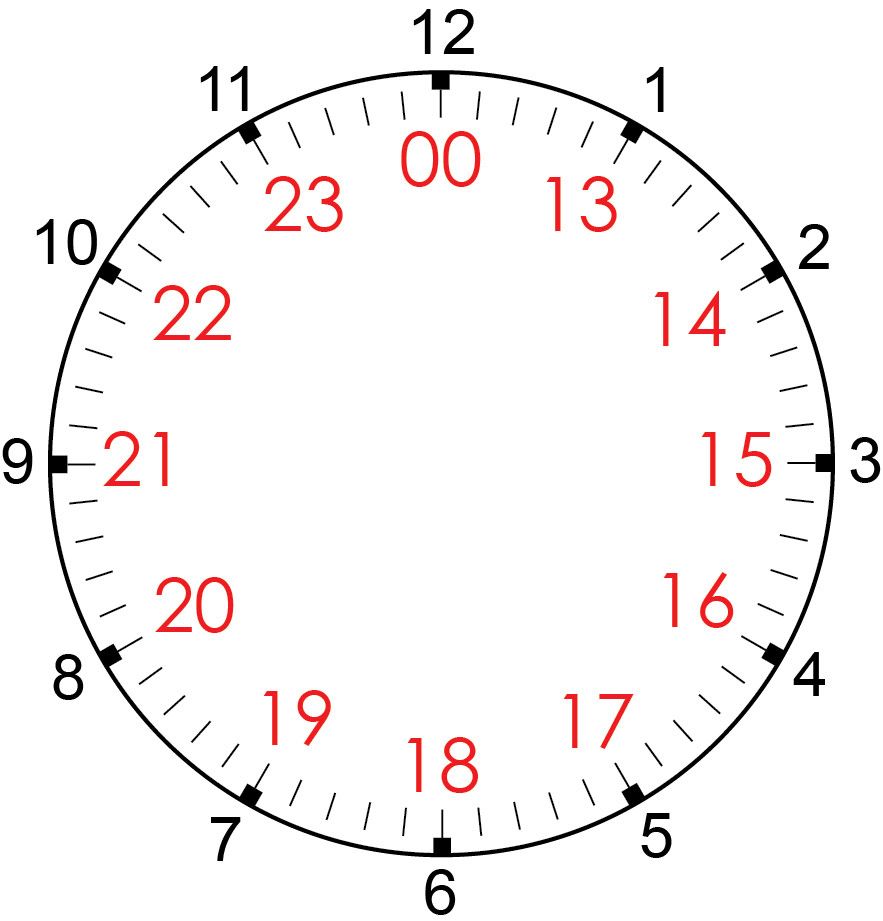
 The 24-hour clock works on a simple principle – it assigns a unique number to each hour of the day. The numbering starts from 0 and goes up to 23. Midnight is represented by 0 or 00:00, while 1:00 AM is represented by 1, and so on. The numbering continues until 11 PM, which is represented by 23 or 23:00. This system eliminates any confusion between AM (ante meridiem) and PM (post meridiem) that can occur in the 12-hour clock format.
 One of the main advantages of using the 24-hour clock is its clarity and precision. It allows for exact time measurement, making it especially useful in situations where precise timing is critical. For example, in the field of aviation, where flight schedules, air traffic control, and airport operations rely heavily on accurate timekeeping, the 24-hour clock provides a standardized and unambiguous system.
Converting between 12-Hour and 24-Hour Formats
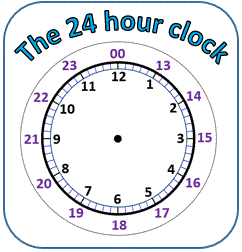 Converting between the 12-hour and 24-hour formats is relatively simple once you understand the basic principles. When converting from 12-hour to 24-hour format, simply add 12 to the hour if it is PM. For example, 1 PM becomes 13:00, 5 PM becomes 17:00, and so on. On the other hand, when converting from 24-hour to 12-hour format, subtract 12 from the hour if it is greater than 12. For example, 15:00 becomes 3 PM, 19:00 becomes 7 PM, and so on.
 The 24-hour clock format is not only useful in professional settings but also in everyday life. It provides a clearer understanding of time and helps in avoiding any confusion that may arise due to the AM/PM system. When planning events, scheduling appointments, or even setting alarms, using the 24-hour clock format can ensure that everyone is on the same page and there are no misunderstandings.
Printable Resources for Learning the 24-Hour Clock
 If you are interested in learning more about the 24-hour clock or teaching it to someone, there are various printable resources available online. These resources include worksheets, charts, and templates that can help in understanding and practicing the 24-hour clock system. These materials often feature interactive exercises and visual representations of the clock, making the learning process engaging and enjoyable.
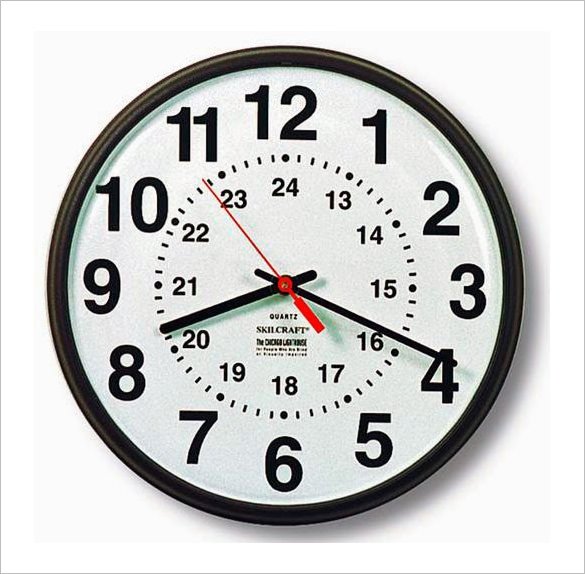 Many websites offer free printable clock templates, which can be downloaded and used for educational purposes. These templates come in different designs and formats, allowing you to choose the one that suits your needs. Whether you are a teacher looking for resources to use in the classroom or a parent wanting to reinforce your child’s understanding of the 24-hour clock, these printable materials can be a valuable tool in your teaching arsenal.
 In addition to printable templates, you can also find printable clock faces featuring the 24-hour format. These clock faces can be used to practice reading and interpreting time in the 24-hour clock system. Whether you need a simple clock face for basic practice or a more detailed one for advanced learning, there are plenty of options available that can cater to your specific requirements.
 With the help of these printable resources, you can enhance your understanding and mastery of the 24-hour clock system. Whether you are a student, a professional, or simply someone interested in learning about different timekeeping methods, exploring the 24-hour clock can broaden your knowledge and improve your time management skills.
Conclusion
 The 24-hour clock offers a systematic and unambiguous way of measuring time. By eliminating the confusion between AM and PM, it provides a clearer understanding of time, especially in professional settings where precision is crucial. Whether you are using the 24-hour clock system for work or everyday life, printable resources can be valuable tools in learning and practicing this timekeeping method. So, why not embrace the 24-hour clock and unlock a new dimension of timekeeping?

